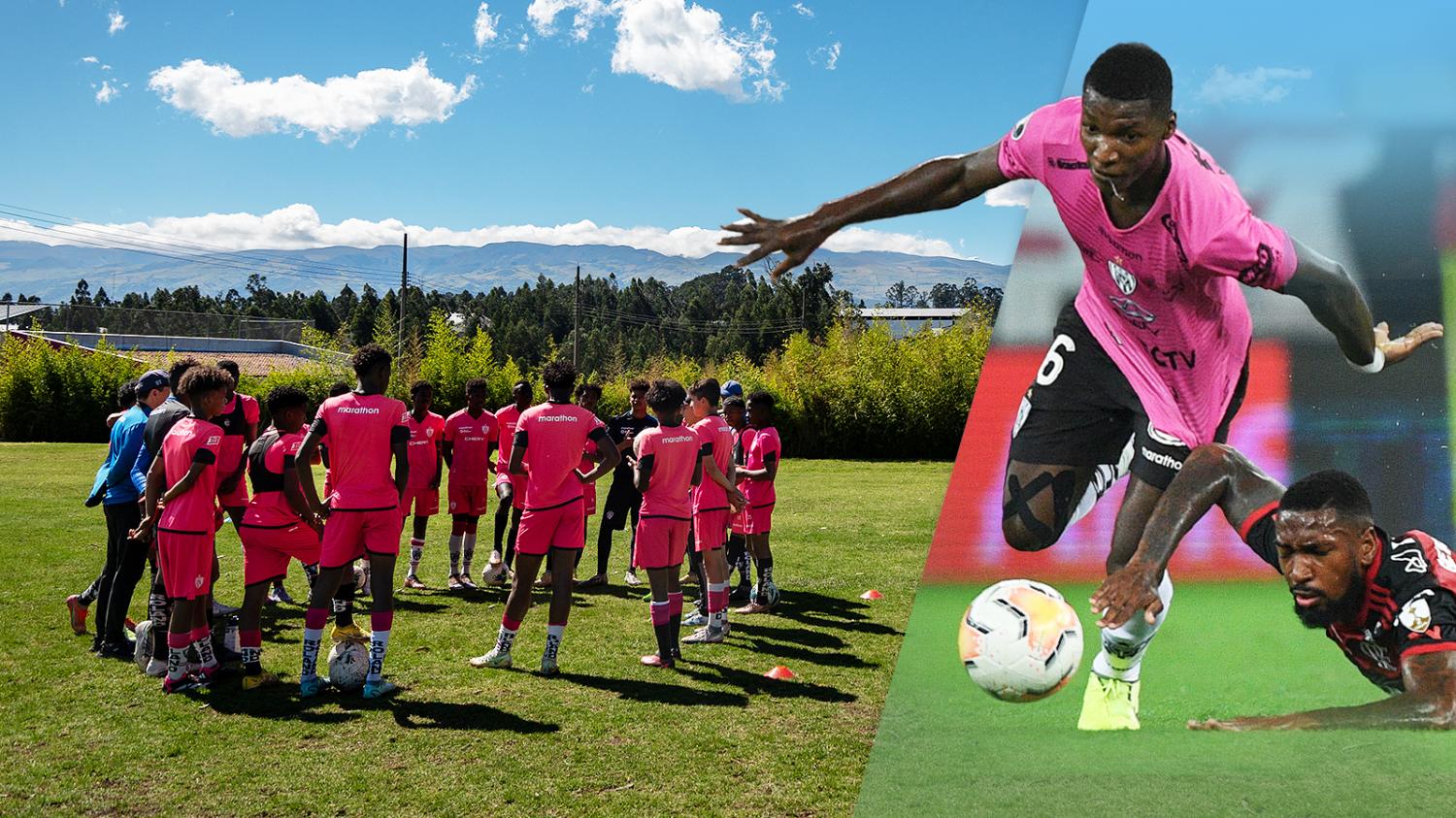
In his second report since visiting Ecuador, Gregor Robertson discovers how Independiente del Valle developed a multilayered scouting network to unearth disadvantaged talents and polish them into coveted — and educated — stars
Published 15/08/23.
If you have heard the name Independiente del Valle recently, there’s a good chance it had something to do with Moisés Caicedo. A footnote in the 21-year-old’s journey from Ecuador’s Liga Pro to Brighton & Hove Albion for £4.5 million in 2021, and now, 2½ years later to Chelsea for a British-record £115 million.
Perhaps, though, you read about Kendry Páez, who was bought by Chelsea from Independiente for £17.5 million in June, only a few weeks after his 16th birthday.
Maybe your club has been linked with Piero Hincapié — a 21-year-old defender nurtured by Independiente, now of Bayer Leverkusen, but coveted by several teams in the Premier League — or another of the young stars to have emerged from this remarkable little club.
Independiente rose to prominence when they reached the final of Copa Libertadores, South America’s equivalent of the Champions League, in 2016. It was a miraculous story — one that rivalled Leicester City’s Premier League triumph that year — coming only a decade after the former third-tier, part-time club had been taken over by Michel Deller, an Ecuadorean property magnate, and shifted their focus towards youth development.

CRISTINE VEGA
Colombia’s Atlético Nacional ended the fairytale that year. But in March, Independiente stunned the continent again. They defeated the Brazilian giants Flamengo in the Recopa Sudamericana final, in front of 70,000 fans at the Maracana, to lift their third South American title.
Independiente’s effect on Ecuadorean football has been profound. Ten of the nation’s 26-man squad at the World Cup in Qatar last year were developed by, or played for, Independiente. But, increasingly, their influence is being felt far beyond Ecuador’s shores.
How, then, in the space of 15 years, did this little club perched high in the Andes become one of the most prolific academies in South America? To help me find out, the club opened their doors to me for three illuminating days last month.
The story of Independiente, Deller begins, “is much bigger than football”.
“Football,” he says, “was the excuse.”
‘The ball is magical’
It is 10am at Independiente’s sprawling, 40-hectare high performance centre in Sangolquí, a suburb of Ecuador’s capital, Quito. A row of pristine grass pitches throb with youthful zest and life. Cotton clouds, rolling in over the Andean Valle de los Chillos, feel close enough to touch. In the distance, the snow-capped Cayambe volcano pierces the azure. Less than 20 miles south of the equator, the sun hangs like a jewel in the sky.
Deller has just stepped down from a construction site at the heart of the campus, swapped a hard-hat for a baseball cap (embossed with the initials IDV), and taken a seat in a stylish suite inside the gleaming 12,000-seater stadium constructed here in 2020. A new indoor surface, with a roof terrace overlooking eight training pitches, a gym, swimming pool, cinema, private school, first-team training complex and accommodation for 150 players aged between 11 and 18, will be the latest addition to the site, on which work commenced in 2008.

CRISTINE VEGA
Deller, along with his associates, bought Independiente in 2007. Since then, they have won two promotions (climbing to the top flight for the first time since the club’s formation in 1958), lifted the 2021 Ecuadorean League title and — before victory in the Recopa in March — twice lifted the Copa Sudamericana (in 2019 and 2022).
Yet the vision, Deller says, was always far bigger. “The ball is magical,” Deller, 63, says. “The ball allows you to do things that otherwise you can’t do in normal businesses. It brings people together, gives kids hope, instils discipline, a desire to become better. It gives you an opportunity to generate profound changes in education, in culture.
“From day one we wanted to be a team who invested heavily in youth development, understanding that most kids who play soccer come from very difficult social and economic structures, and this is their opportunity to have a much better life. To become role models, agents of change, and at the same time accomplish extraordinary things in football — because we’ve always had talent in Ecuador.”
It does not take long in Deller’s company to realise that something deeply personal drives this investment too. Deller’s family roots lie in southern Germany. Like hundreds of thousands of Jews, they emigrated before the outbreak of the Second World War. The Dellers came to Ecuador. They built a new life in Quito. And this, Deller says, “is a way to give back to the community, to give back to this country, which has opened its doors, and been so generous to us.
“This, really, is the essence behind everything.”
‘Valley of Dreams’
Quito, sitting 2,800 metres above sea level, unfurls like a ribbon through the Andes. It is a breathtaking city — and not just because of the altitude. Its warren of narrow streets, wide, cobbled plazas and ornate, Spanish colonial-era churches earned the title of Unesco’s first World Heritage site.
The beauty of Quito’s centro historico, however, is a world away from the lives most of Independiente’s young players left behind. The country’s security situation has deteriorated dramatically in recent years. According to Ecuador’s National Police, at least 2,900 murders were recorded nationwide between January and May this year.
On August 9, not long after I had visited, the presidential candidate Fernando Villavicencio was shot dead at a rally in Quito. Growing violence linked to drug trafficking and organised crime have prompted state of emergencies in the coastal cities of Guayaquil and Esmeraldas.

CRISTINE VEGA
Yet these are the places where Independiente discover most of their young talent. Many come from extreme poverty. Some arrive malnourished, with huge gaps in their education. As Arkaitz Mota Ferri, Independiente’s head of recruitment, tells me with absolute clarity: “The best players come from the areas with the most hardship.”
The talent, as Deller says, was always here. What Independiente have done, on a scale previously unknown in Ecuador, is unearth it, polish it and let it shine. Their scouting system is now a vast, multilayered network, with ten full-time regional scouts and 120 affiliated soccer schools — half of which are franchises — everywhere from the Galapagos Islands to the Pacific coast to the Amazon jungle. “We are across everything,” Mota Ferri, who has two decades of experience in the field with Barcelona, Real Madrid and Qatar’s Aspire Academy, explains. “Schools, tournaments, neighbourhood matches, beach football — everything.”
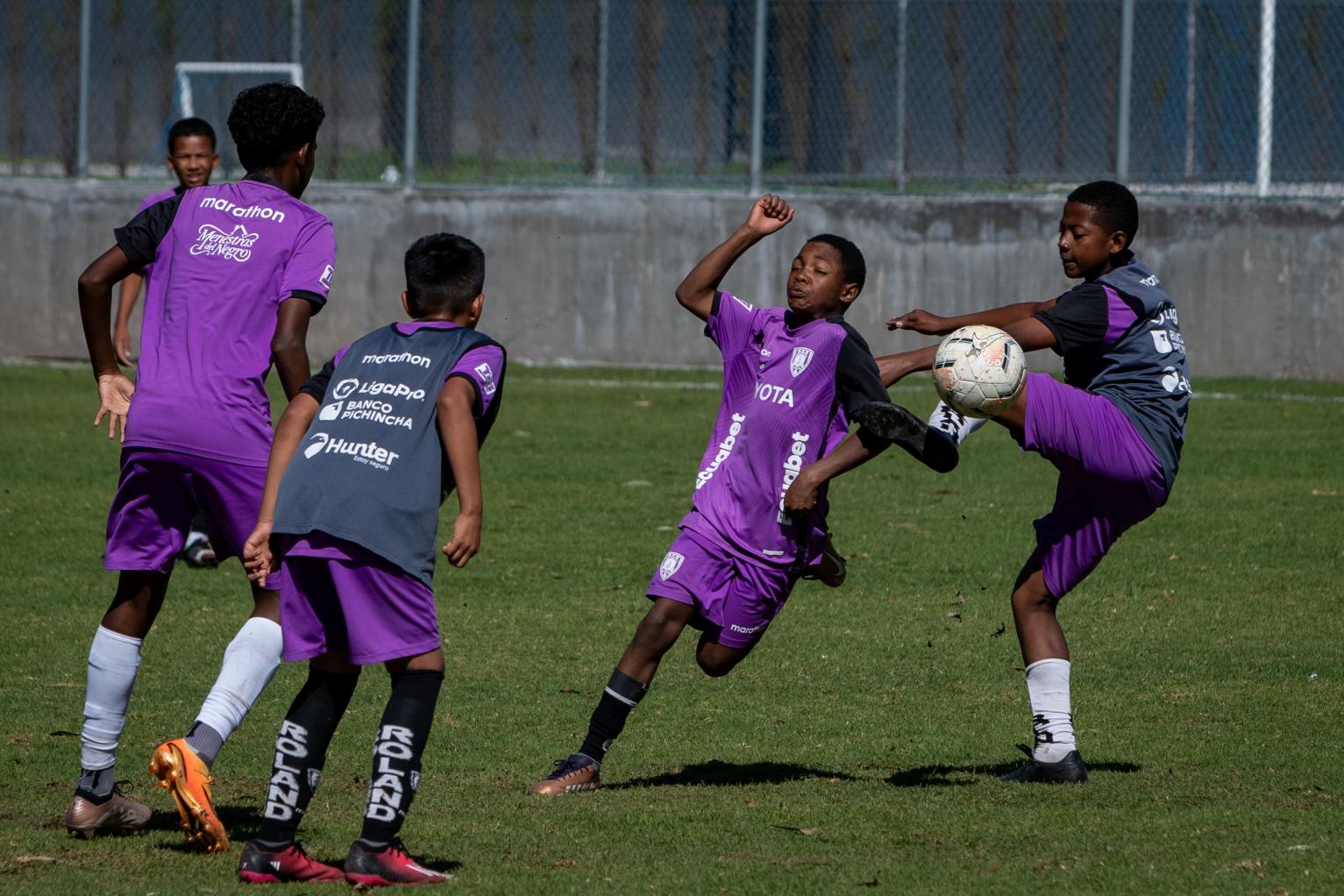
Once players have been discovered, they are invited to one of the club’s elite performance centres in Guayaquil and Esmeraldas. From there, if talented enough, they are invited to Sangolquí. During a tour of the campus, I’m shown the “Trialist’s House” — humble rooms with bunkbeds and lockers — with lodgings for up to 30 potential recruits. Aged 14, Caicedo spent several weeks here before earning his place. Once accepted, he passed through a symbolic gate that represents entry to the Formativas: a two-story block, painted in vivid blue and pink colours, housing two or three players to a room.
CRISTINE VEGA
The “Valley of Dreams”, a wall with the names of all 75 academy graduates who have made Liga debuts for Independiente since 2008, is a source of daily inspiration. At the end of the Formativas’ walkway stands another gate: this one represents entry to the first-team complex.
Three full-time “tutors” live on campus and deal with every aspect of player welfare. The role, says Pancho Quiñónez, the first to hold the position, is almost “paternal”; many of the players, who have never left home before, refer to the tutors as “Papi”.
The players’ entire lives are on this campus. A games room, library and cinema keep them entertained when not training or studying. A plaque outside the cinema underlines the world many of these young boys have been given a chance to leave behind.
On May 12, 2019, Mauri Quiñónez, a defender for Independiente Juniors, returned home to Guayaquil for Mother’s Day. He was shot twice, in a targeted attack, by assailants on a motorcycle — collateral damage in a dispute between families. He was 19.
Gerald Patrick Mora Zambrano, who plays for Independiente Under-19, remembers Quiñónez as a dedicated professional, always friendly, great company. Zambrano comes from the same neighbourhood, but has been unable to return home for almost a year. His family have been targeted by extortion gangs.
Zambrano, 18, who speaks with great conviction, tells me he has two dreams: to bring his mother and 14-year-old sister to Quito, get them out of Guayaquil; and to play in the Premier League. “I like Tottenham Hotspur,” he says, breaking into a broad, infectious smile.
‘Many clubs say their academy is important; only a few really mean it’
The trophy cabinets inside Independiente’s academy are overflowing. A haul of national championship trophies at every age group — under-13, 15, 17 and 19 — are temporarily lined up along the floor of the club’s in-house TV studio (which broadcasts academy fixtures on YouTube).
Dominating Ecuador is one thing. Last month, though, the under-20s reached their fourth consecutive Copa Libertadores final (which they lost 2-0 to Boca Juniors in Chile). Three years ago Caicedo captained the team who defeated River Plate in the final to become South American champions.
Every summer Independiente host a prestigious under-18 competition, The Middle of the World Cup, which attracts the best teams in the continent. “Every single weekend there are lots of scouts here,” Franklin Tello, the club president, says. “We are now drawing the eyes of the biggest teams around the world.”
Players from Independiente’s production line now invariably account for between 30 and 40 per cent of the country’s national teams across all age levels. For example, at the Under-20 World Cup in May, eight of Ecuador’s 21-man squad played for, or were developed by, Independiente.
The club have two teams at every age group, who are regularly tested in tournaments overseas, a B-team (Independiente Juniors) who play in Ecuador’s second tier, all overseen by a team of about 40 full-time coaches. By the end of the year, there will be 50 girls living here too, as the women’s team — the Dragonas — expand.
Deller says a deal to share expertise and personnel with Aspire — the academy founded in Doha in 2004 to scout and develop Qatari athletes — accelerated Independiente’s development by “at least a decade”.
Andoni Bombín, the academy director, believes Independiente’s programme now rivals any in Europe. He is in a good position to judge: he joined in February, after more than a decade with Athletic Bilbao, famed for their commitment to developing and playing players from the Basque Country of Spain. “Many clubs say, ‘We are going to invest in youth, because we want academy players in our first team,’ ” Bombín says. “Many clubs say that — but only a few really mean it. Independiente is a club that means it.”
Miguel Ángel Ramírez, who coached Caicedo in Independiente’s academy and first team, agrees. “For me it’s like Disneyland for the development of football players and coaches,” Ramírez, who now manages Sporting Gijón in Spain, says. “It has everything.
“It took hard work and huge investment. But now the Ecuadorean players around the world are much better prepared than before. Before, people said they were not able to adapt, were not disciplined enough to perform consistently. Not any more. And not any more thanks to Independiente del Valle. Now, boys like Caicedo, and all these boys around the world, are ready.”
‘How do you keep a kid like Kendry, who has all these clubs looking at him?’
Jefferson Montero was the first. The winger — who would go on to represent Swansea City, West Bromwich Albion and Birmingham City — was sold to Villarreal for about €500,000 in 2009. Since then, the club have raised about £70 million from player sales to clubs in Spain, Italy, Belgium and Portugal, as well as more traditional exports to the US and South America — an extraordinary amount for the region, and that does not include revenue from the sell-on clauses routinely inserted into deals.
Independiente know, of course, that granting a player the chance to showcase his talent on a bigger stage can lead to an exponential rise in value. One example: in January 2022, Royal Antwerp paid about €3 million for Willian Pacho; 12 months later the Belgian club agreed a €16 million deal with Eintracht Frankfurt, whom the 21-year-old defender joined up with this summer. The sell-on clause in Caicedo’s deal was 20 per cent, so Independiente are now in line to bank £23 million.
Moreover, between 2016 and 2022, Independiente earned more than $33 million (£25.5 million) in prize money from Conmebol competitions. Only five South American teams accrued more. Thirty per cent of Independiente’s turnover is strictly ring-fenced for their academy programmes. But with soaring revenues, a fund (the value of which is not divulged) has been established to pay for infrastructure projects and safeguard the club’s future. As Deller says: “This has generated immense income, but in Ecuador teams are not-for-profit organisations — we cannot generate profits — which is a wonderful thing.”
As Deller is keen to point out, success brings new challenges. “We are losing talent very young now, which we do not want — I would like to be very clear about that,” he says. “Now Independiente is fighting for important [trophies], as a professional club, we’d like to enjoy and live with them a little bit longer. As the club gets bigger, we can pay better salaries. But it’s a struggle. How do you keep a kid like Kendry, who has all these clubs looking at him?”
In Ecuador many believe that Páez, who will join up with Chelsea after his 18th birthday, has the potential to be the best player the country has produced. He scored on his first-team debut in February, aged only 15. He has already played in the senior Libertadores. Had it not been for a failed US visa application in June, he would already have made his senior Ecuador bow.
His family moved from Guayaquil to Quito recently to help him remain grounded before the move to London in 2025. “The Ecuadorean people have to take care of him,” Martin Anselmi, Independiente’s head coach, tells me. “Criticising is easy. I am from Argentina, and we did something similar with Messi. To be clear, I am not comparing. But to the Ecuadoreans, he is the Messiah; the player who will save Ecuador, who will win the country trophies with the No 10 on his back.
“He is an amazing player. In Ecuador, he gets called Di María, because when he was a kid, he was similar [in build to Ángel Di María], but he is a different player. He is left-footed. He always impacts the game. He thinks quick in tight spaces. He scores and creates goals. When he has the ball, he sees things differently.
“But his biggest strength is his character, his personality. He has no fear.”
‘Success in football should not define us’
Perhaps, in a decade or two, neighbouring Colombia will be reflecting upon the impact of the Independiente Group on their nation’s team too. In May, Deller acquired Atlético Huila, a team in Colombia’s top flight. The plan is to replicate this model. “It’s a bigger country. They have immense talent, and there are immense opportunities, but we are just starting,” Deller says. “Here we’ve been working 15 years. We’ve accomplished a lot, but it’s been 15 years of really hard work. There, we’re a few weeks in. So we’re going to be patient and do it right.”
Deller’s group also bought a stake in the Spanish club Numancia in 2021. There, Tello admits, in the wake of relegation to the Spanish fourth tier on the final day of last season, the “dynamic in Europe has been a learning curve”.
So what does the future hold for Independiente? And is this now the best academy in South America?
Deller and Tello pause for a moment. “I don’t know if it’s the best,” Tello says, “but for sure I would say it’s once of the most complete.” Deller agrees, adding: “I would say to the English fans: get used to seeing more Ecuadorean soccer players, from Independiente and other teams. I say that humbly, but it will happen.”
CRISTINE VEGA
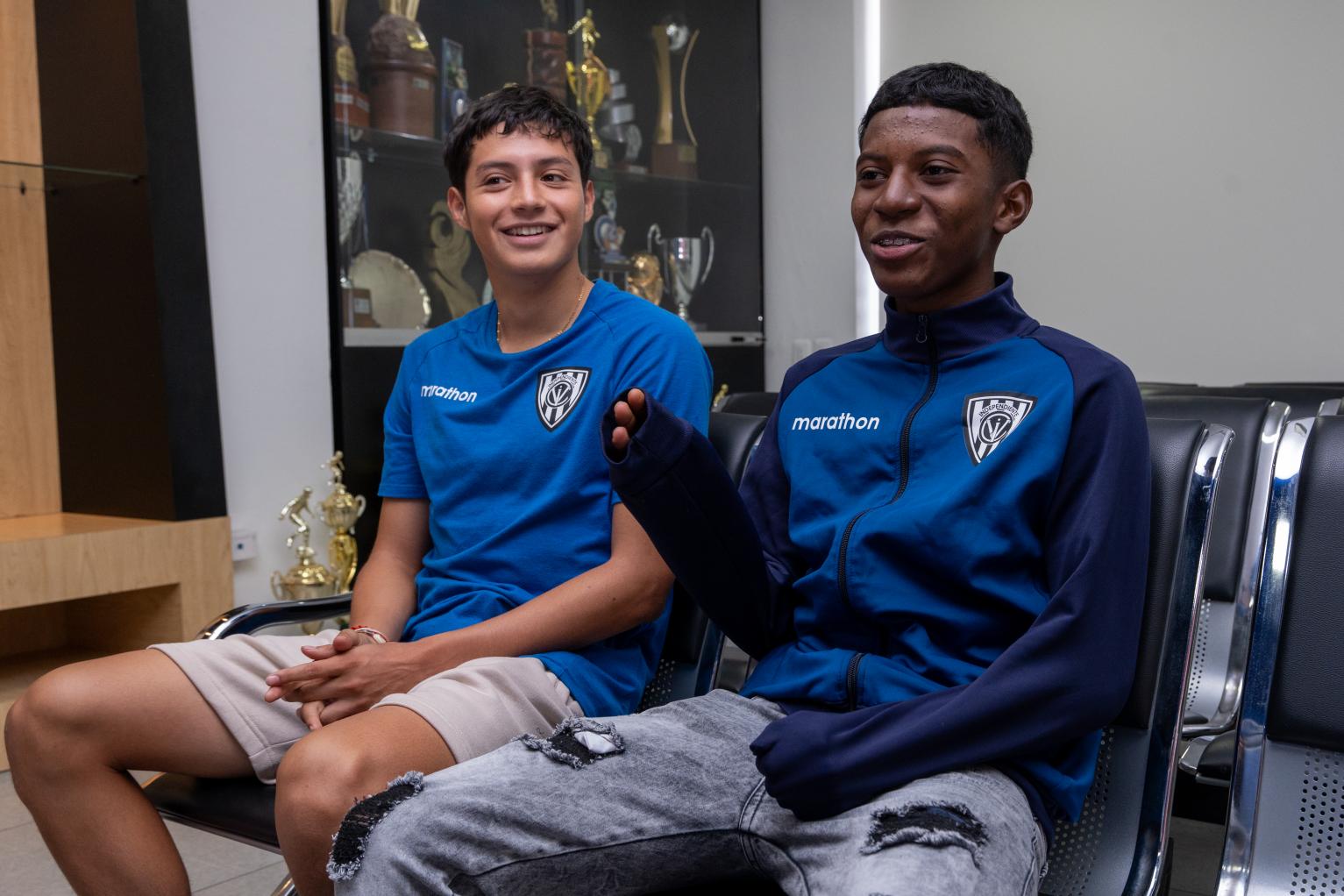
As extraordinary as it may sound, however, success on the pitch is not how this club measure their success. Deller and Tello take most pride from the work being done by the club’s new school. Two years ago, Independiente decided to abandon the formal state syllabus and enlist the services of REInvented, a private school with a more personalised curriculum.
The school teaches three core subjects — maths, communication and English — through workshops and projects, often linked to football, all of which are taught bilingually. Its classrooms are beautifully appointed, open-plan spaces, with round tables and booths encouraging collaborative learning.
Michael Arce, a councillor and teacher here, explains that the school’s ultimate aim, given the environment many of these children come from, is to prepare them for independent, productive adult lives. Last year’s graduation ceremony was hosted by a 13-year-old player. This year, it was the turn of one of the Dragonas — one of two girls who graduated from the school for the first time. Both handled proceedings with aplomb.
One of the most striking aspects of my visit to Independiente was something very simple. Every player I passed — from the 11-year-old to the young adult — stopped to greet me and shook my hand. “How many places in the world do you see that?” Deller says, as another greets us outside. “That’s very meaningful. We work very hard on respect, self-esteem. All the kids have to shake your hand — and, more importantly, look you in the eyes.”
Sometimes, a little mischievously, Pablo Trujillo, the club’s press and marketing manager, says: “In English, please!” and many are able to introduce themselves, tell me where they are from. “One of our aims is that when they graduate they can speak perfect, fluent English,” Tello says. “We are not there yet, but these are the kind of goals we have.”
Independiente’s club slogan is “un club diferente” — and this is, indeed, a different kind of club. “Behind us is the logo of Independiente, with the three big stars,” Deller says, pointing to a crest above which stars represent those three South American titles. “Sometimes you lose perspective, view the professional game as what’s most important. In reality, that’s not what should define us.
“What should define us is how many kids graduate from school, how well prepared they are, how many of them are going to live very productive and good lives — that aren’t involved in football, because not all of them are going to become professional players.
“Those are the things we talk about. That’s the essence behind this club. And I think sometimes that’s the reason we have this special energy; an energy that allows us to accomplish things that otherwise seem impossible, definitely improbable. Because there’s a greater cause behind it.”
***
Ten of Ecuador’s 26-man World Cup Squad were developed by Independiente:
Moisés Ramírez, 22 (still Independiente DV)
Piero Hincapié, 21 (Bayer Leverkusen)
Willian Pacho, 21 (Eintrach Frankfurt)
Ángelo Preciado, 25 (Genk)
Jackson Porozo, 23 (Olympiacos on loan from Troyes)
Carlos Gruezo, 28 (San Jose Earthquakes)
Jhegson Méndez, 26 (Sao Paolo)
Gonzalo Plata, 22 (Al Sadd)
Alan Franco, 24 (Atletico Mineiro)
Moisés Caicedo, 21 (Chelsea)
Independiente graduates in Europe
Piero Hincapié, 21, Bayer Leverkusen
Willian Pacho, 21, Eintracht Frankfurt
Ángelo Preciado, 25, Genk
Jackson Porozo, 22, Olympiacos (on loan from Troyes)
Joel Ordóñez, 20, Club Bruges
Anthony Valencia, 20, Royal Antwerp
Alan Minda, 20, Cercle Bruges
Moisés Caicedo, 21, Chelsea
Kendry Páez, 16, Independiente (on loan from Chelsea)
***
 gregor-robertson.com