
From Santo Domingo to Independiente del Valle, Gregor Robertson visits the places that shaped the development of a £100m-rated midfielder, the youngest of ten siblings, who could not afford a bus fare or football boots as a youngster
Published 08/08/23.
The road from Quito to Santo Domingo is a 100-mile long, 2,200-metre descent across the western foothills of the Andes. Epic, sprawling vistas are married with nerve-wracking, precipitous, hair-pin bends. Trucks hurtle down steep inclines, twisting and turning through the clouds. Landslides frequently render the route impassable.
Every village it passes through — daubed in vivid pinks, oranges and reds — is an assault on the senses. Steam rises from huge pots in bamboo-hut roadside cafes. Street-sellers slalom between cars, hawking bags of mango, giant sheets of pork crackling, wafer cones filled with whipped cream and fruit, or the teeth-crunching candy Melcocha.
As the descent continues, the humidity rises. Lush, tropical forest clings to vertiginous slopes. Finally, as the road plateaus, the damp, grey skies yawn.
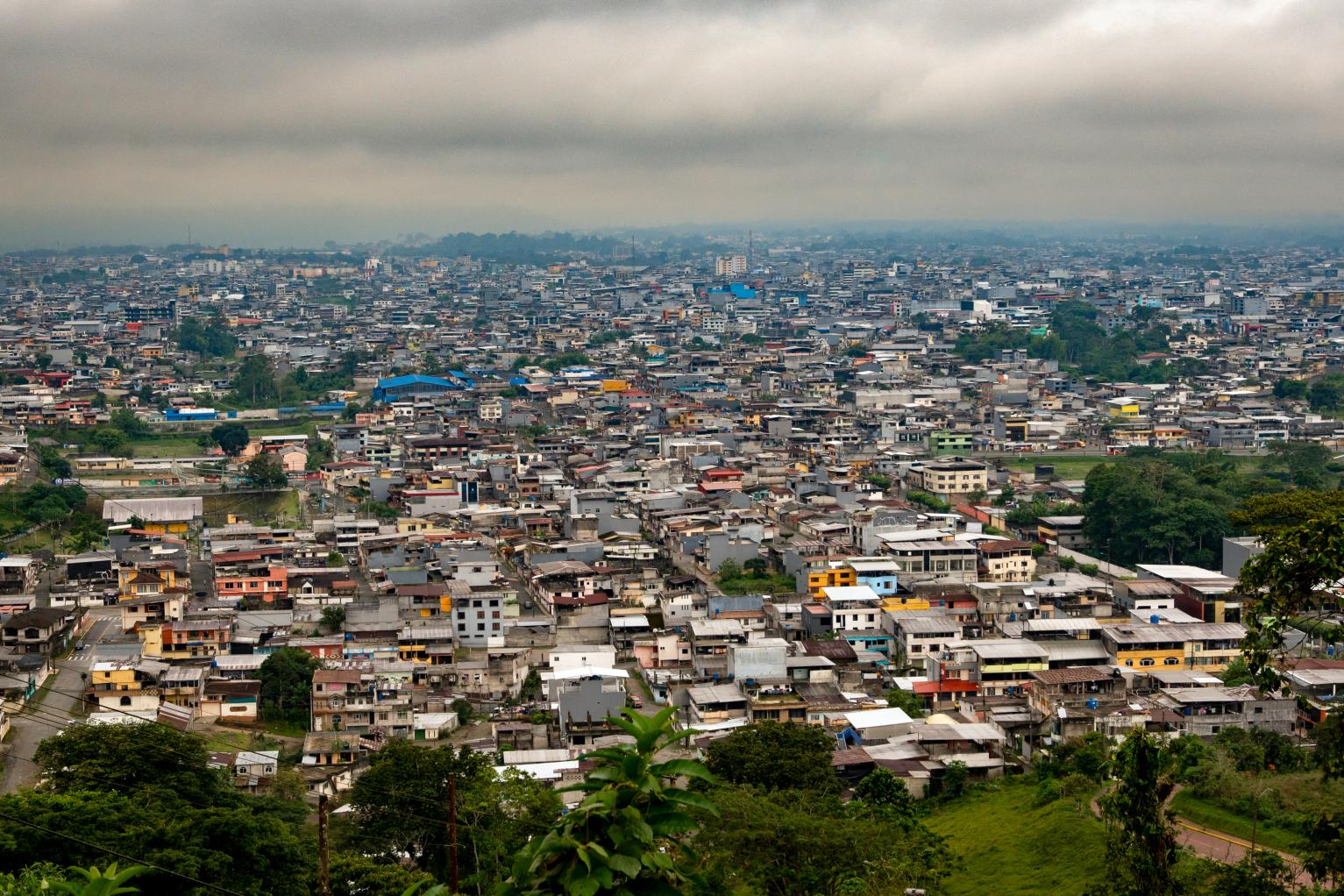
Ecuador, as the saying here goes, is the country of four worlds: the Amazon jungle, the Galapagos Islands, the Andes mountains and the Pacific coast. For the first 14 years of Moisés Caicedo’s life, Santo Domingo — in the northern coastal region, with its tropical monsoon climate — and his neighbourhood, Mujer Trabajadora, were all he had ever known.
But to fulfil his dream of becoming a professional footballer, to grasp the chance to provide a better life for his family, he left it all behind at 14. He travelled high into the Andes, to Quito, Ecuador’s capital city, 2,800 metres above sea level, where the air is thin and cool.
And so began — on this road between two worlds — the journey on which El Niño Moi, as the 21-year-old is affectionately known, appears destined to become the most expensive Ecuadorian footballer of all time.
‘We didn’t have goalposts, so they would put down rocks on the street, sometimes play without shoes’
The club Caicedo was joining, Independiente del Valle — from Sangolquí, a suburb of Quito — is one of the most revered academies in South America. Over the past 15 years, through an unwavering commitment to youth development, they have grown from a third-tier, regional club to one of the strongest teams on the continent.
Caicedo would often tell his mother, Carmen, that Independiente would come for him soon. Yet without the support and kindness of a few key figures in his life, he might never have made it that far.
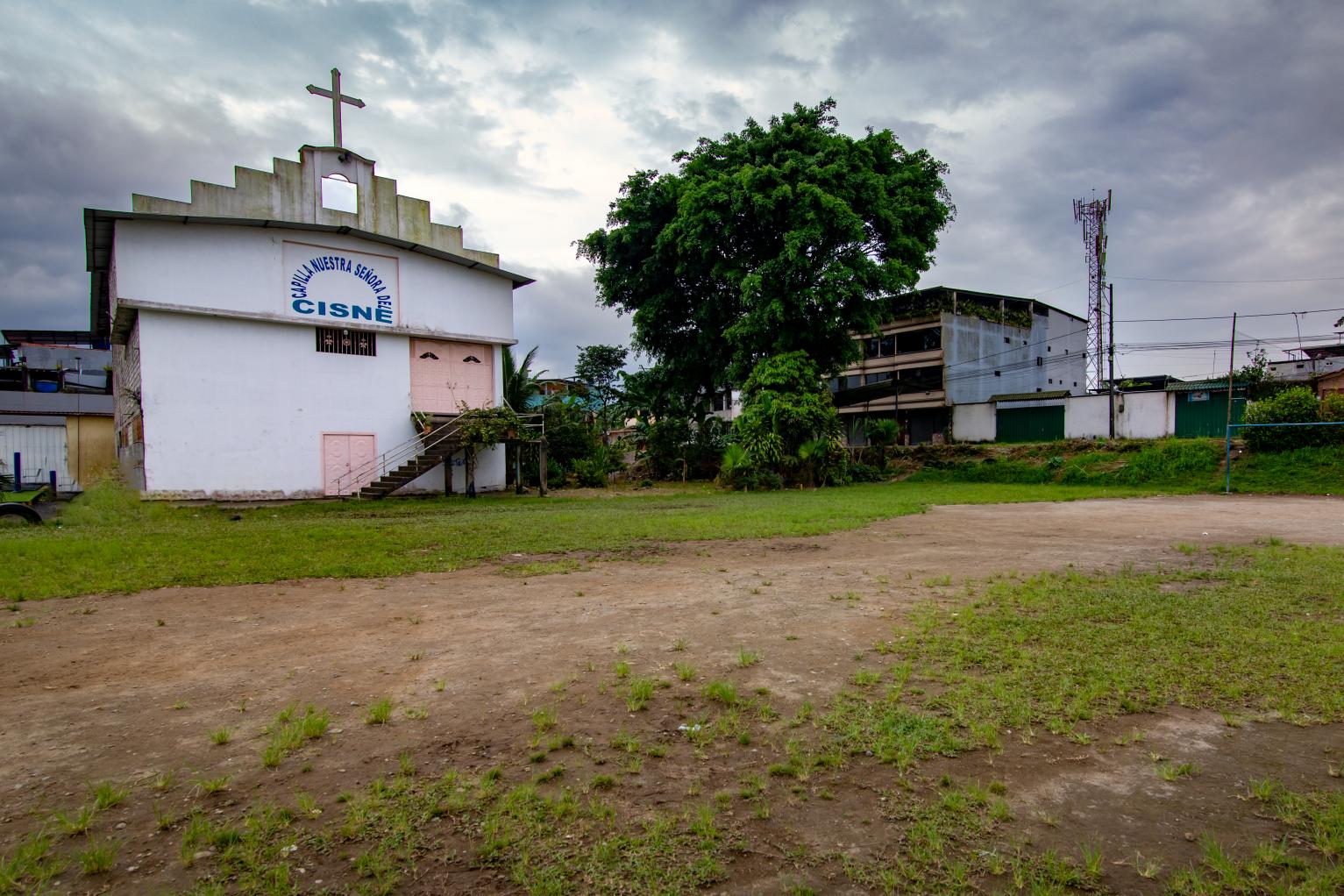
Ivan Guerra, Caicedo has said, was the first person to truly believe in him. Guerra is standing on a dusty pitch in Mujer Trabajadora (which translates as “Working Woman”), home to the soccer school Caicedo played for between the ages of five and twelve.
The pitch, hemmed in by housing and untarmacked streets, sits beneath the cross of the Capilla Nuestra Señora Del Cine church. Black damp clings to breeze-block walls. On one building, over empty window space, bin bags flutter. The sound of a cockerel crowing, of stray dogs barking, is drowned out by a handful of locals singing Mariachi music outside a shuttered liquor store.
The city of Santo Domingo is a bustling hub for trade and transport. Statues of the Tsáchila tribe — distinguishable by their red, helmet-like haircuts and striped kilts — are a nod to the indigenous people of the province. But this is also a place where many live in extreme poverty.

Mujer Trabajadora, Guerra says, has trouble with gangs. They ride by on motorbikes, commit robberies in the street. Some children, he says, are afraid to come to the school. This is where Caicedo grew up; Guerra points to a pink house at the end of the street which, he says, was home to Caicedo and his nine older siblings. (Caicedo has since bought a home for his family elsewhere in the city.)
Guerra, 54, who played for Olmedo, Deportivo Quevedo and Macará before becoming a coach, still remembers the first time that he laid eyes on Caicedo, a stone’s throw from here. “We didn’t have goalposts, so they would put down rocks on the street, sometimes play without shoes,” Guerra explains, as he sets out some equipment for training — a few cones, some poles, a bag of tatty, leather-worn balls. “I could see he had talent. So I invited him to the school.
“The kids pay a fee, but only if they can afford it. The family was very poor. Whenever we were playing in another city, he would always be the last one on the bus — he liked to sleep — but sometimes it was because he didn’t have money for the fare.
“I would cover the cost, knock on his door, tell him, ‘Let’s go!’ He didn’t have any boots. Sometimes friends would lend him theirs, or I would ask around to get a pair for him. But he was the best here. He would play anywhere — left, right, in midfield. If we were losing, he would say, ‘Put me in goal!’ He always wanted to be involved.”

For Caicedo’s mother and father, putting food on the table was a daily challenge. “There’s a parking lot in the neighbourhood, where people parked for a fee. Moisés’s family were involved with that,” Guerra says. “His mum made flower arrangements, sold them on holidays — Valentine’s, Easter, Day of the Dead. Moisés birthday is November 2 [the Day of the Dead]. But instead of celebrating his birthday, he would help his mum. When he was 14, though, we celebrated his birthday: me, my wife, Moisés and his sister. We bought him a cake, with candles, sang happy birthday.
“I’m immensely proud of him.”
‘His strength, his vision, everything — everything had changed’
By the time he was 13, Caicedo was ready for a bigger stage. He had been selected for a Santo Domingo regional XI. Espoli, a professional club affiliated to a local amateur team called Jaipadida, had invited him to play. When Espoli were relegated, however, the affiliation ended. Suddenly, Caicedo and others were left without a route to the professional ranks and no money to pay for kit and registration fees. He was in limbo.
Darwin Castillo, Jaipadida’s director, recalls the day that Caicedo turned up with the parent of a friend. In the end, the school, a not-for-profit organisation, decided to admit him and, together with the parent, they raised the money for him to play.
Jaipadida, a vibrant school with five pitches, eight coaches and 350 players on their books, strives to provide a platform for players to reach the professional ranks. Oscar Zambrano, a 19-year-old midfielder with Liga de Quito, who is reportedly coveted by Barcelona, is one of several future stars to have graced Jaipadida’s fields.
Castillo recalls sending Caicedo and seven others for a trial for with Mushuc Runa, a Liga Pro club from Ambato. But he was sent home after a week because he didn’t have any money for food or board. Further rejection followed from Barcelona de Guayaquil. “But Moisés took it well,” Castillo says. “He knew he was going to have to knock on doors to fulfil his dream.”
There were happy times here, too. Castillo shows me reels of triumphant team photos: Caicedo grinning with his team-mates; a picture of a boat trip after a game in the coastal city of Manta; a video of Caicedo dancing on the team bus on the way back from another game — “Like his celebration after his first goal for Brighton,” Castillo says with a smile, in reference to Caicedo’s strike in the 4-0 win against Manchester United in May 2022.
Six months after Caicedo had joined Independiente, Castillo adds, he returned to Jaipadida to play in an annual competition hosted by the club. “The change in him was amazing,” Castillo says. “His strength, his vision, everything — everything had changed.”
‘He was always very clear about where he wanted to get to — the Premier League’
Even the best players sometimes need a slice of fortune, a door to be pushed ajar, an opportunity to seize. Caicedo’s came thanks to his brother, Marco. Galo Rodriguez, the Independiente Under-16 manager, used to help out with an amateur club some friends played for. Marco played for the team. One day, he told Rodriguez he had a brother back in Santo Domingo who could play. He asked if he would take a look.
“No one person discovers a player,” Rodriguez, who now manages Independiente Juniors, explains. “Every coach, from an early age, has played a role. But he was a natural. I knew very quickly that he would play abroad.” From the outset, Rodriguez says, Caicedo “always had that uncanny ability to win the ball”. A few weeks into Caicedo’s trial, he had seen enough.
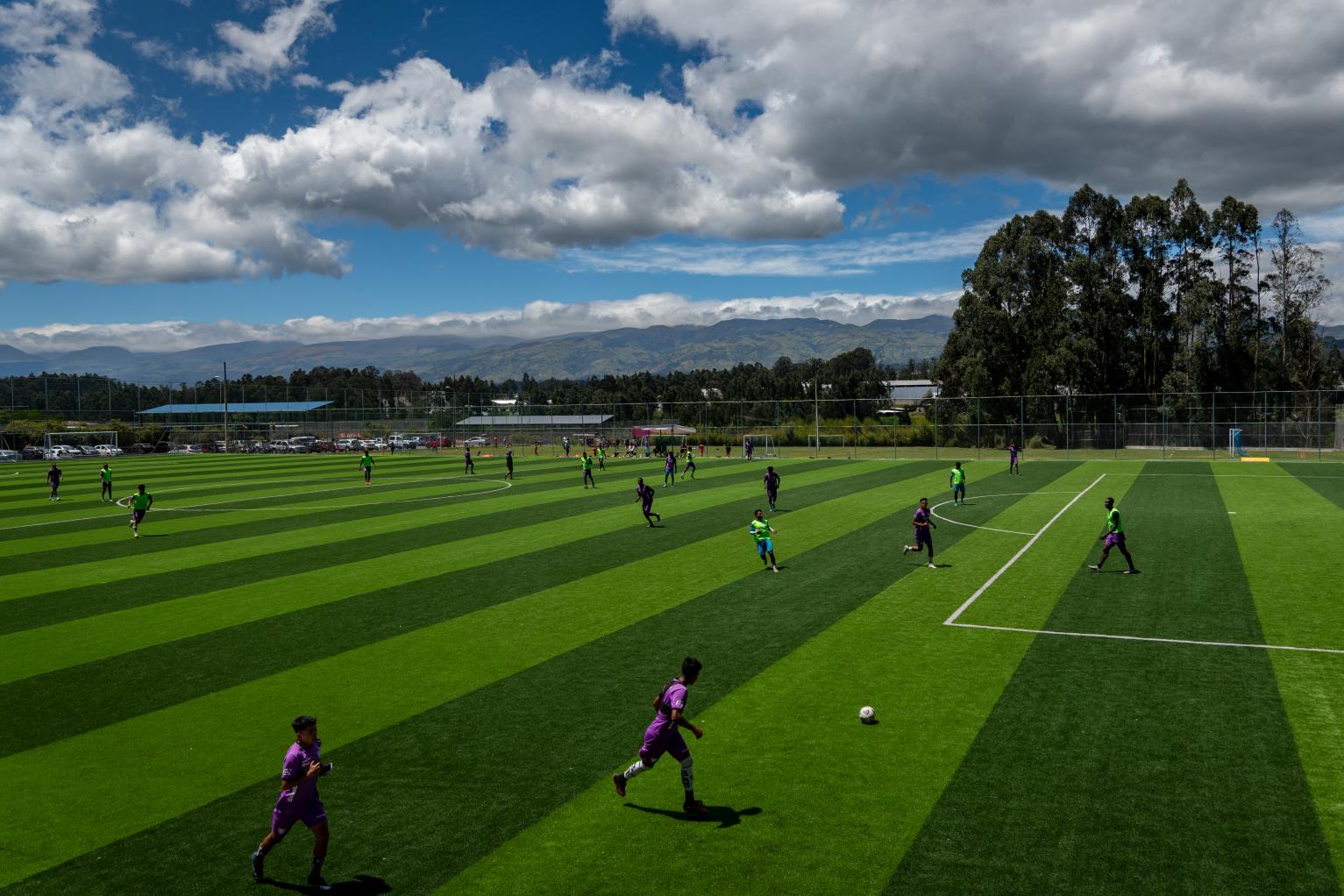
As you arrive at Independiente’s High Performance Centre in Sangolquí — a sprawling campus where 150 players from all over Ecuador, aged between 11 and 18, live, eat, study and train together — a wall by the gates is adorned with an enormous sign. “Un Club Diferente” (“A Different Club”), it reads. Thanks to the investment of Michel Deller, an Ecuadorian millionaire, this complex has almost single-handedly transformed Ecuadorian football.
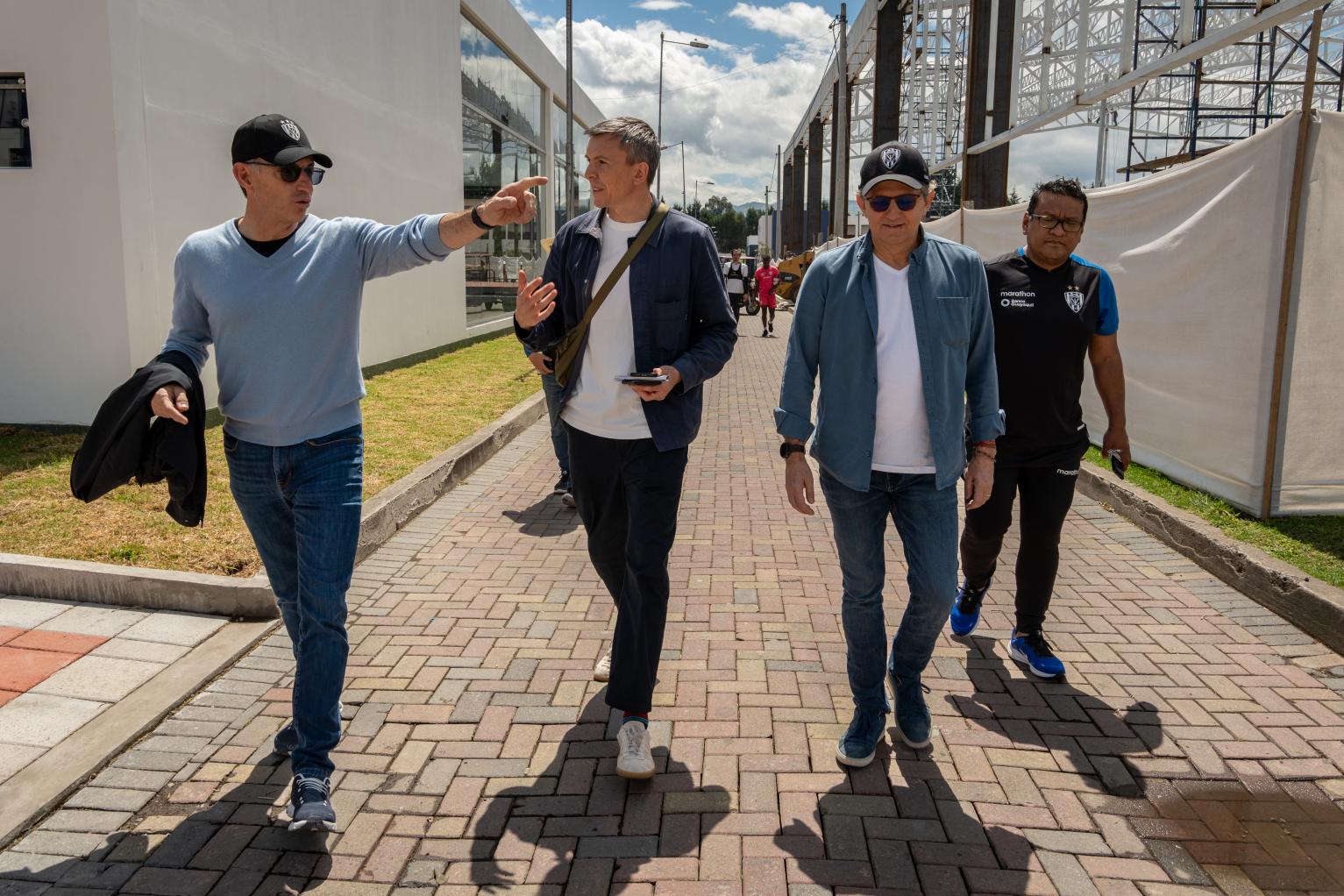
Caicedo’s first few months here, however, were marred by terrible homesickness. While not uncommon, Rodriguez admits he was not sure how long Caicedo would last. “Most of these kids come from very poor neighbourhoods,” he explains. “Cities where drugs, theft, violence are part of daily life. When they arrive at Independiente, they suddenly have an ideal environment in which to live, three meals a day, structure. Dealing with that is in itself a huge challenge.
“Moisés almost left. He was sad. He wasn’t adapting. He wanted to go home. Many of the kids, coming from where they do, put up a shield, act quite aggressive, to establish their ground. And then you had Moisés, a very introspective, quiet, shy guy. We all tried to help him, but it was Moisés who had to overcome that.”
At one point, Caicedo called his mum and told her he wanted to come home. “You can’t, you’ve come this far,” was her response. “She was his main motivation,” Rodriguez adds. “He wanted to do everything he could to help her, to support her — and I think that is true to this day.”
What struck Rodriguez most about Caicedo, however, was the contrast between his on and off-field demeanour. “On the pitch he was this lion, this gladiator, and then the moment he was off the pitch he barely spoke,” Rodriguez says.
When Caicedo was sent off twice in quick succession for reacting to bad challenges, Rodriguez and the club psychologist, Dr Victor Guaman, sat down with Caicedo to find out what was troubling him.
“There was no deeper issue,” Rodriguez says. “He was just so determined to reach his goal. Moisés always said he was going to play for Manchester United. He compared himself to [Paul] Pogba. He was always very clear about where he wanted to get to — the Premier League.”
‘A message to the world: remember the name Moisés Caicedo’
When Caicedo was first invited to join in first-team training in 2019, Martin Anselmi, Independiente del Valle’s assistant coach at the time, remembers thinking: “This boy understands everything.”
A ruptured ACL had kept him on the sidelines for ten months, another test of Caicedo’s resilience, but when he returned his development began to accelerate rapidly.
His first-team debut arrived a month before his 18th birthday. Soon after, Anselmi says he told Caicedo he would be the first Ecuadorian to play for Real Madrid. “He reminded me of Casemiro,” Anselmi, now Independiente’s head coach, says.
“He was so smart, strong, technically excellent. Always, when it looked as though he couldn’t win the ball, two or three steps later he’d won the ball. Every coach wants to have a Moi in his team.”
Indeed, that ability to win the ball, with an outstretched leg in improbable circumstances, meant team-mates nicknamed him “The Octopus”. Anselmi recalls one game when scouts from a Spanish club were in attendance and Caicedo, who had just returned from injury, was introduced with 20 minutes to play.
“The goalkeeper kicked it long and he jumped, like Michael Jordan, and seemed to stop in the air,” Anselmi says, with a look of dismay. “Then he controlled the ball [with a foot in the air] and accelerated away with it. I turned to the [scouts] sitting behind me and said, ‘This is Moi.’ ”
Everyone at Independiente, however, refers to one specific story about Caicedo. By 2020, he had become crucial to the first team, but he was also captain of the Under-20 Copa Libertadores team competing in Paraguay. At one stage, the club asked him to fly back from Paraguay to play in a league game against Liga de Quito, then fly straight back to Paraguay, where he helped the under-20s become champions of South America. “All in one week,” Anselmi emphasises. “No complaints. Talk about personality.”
Once Caicedo began starring in the senior Libertadores, South America’s equivalent of the Champions League, it did not take long for scouts to start flocking to Quito. “I knew Moisés would not be with us long,” Miguel Ángel Ramírez, who first coached Caicedo in Independiente’s academy before taking over the senior side in 2019, says.
Ramírez, now manager of Sporting de Gijón in Spain, recalls one moment with particular fondness. “When he scored his first goal in the Libertadores [in a 5-0 win against Brazilian giants Flamengo], he ran to me to celebrate,” Ramírez explains over Zoom.
“I turned him to the TV cameras, as a message to the world: ‘Hey, guys, here he is, he’s ready. Welcome to Moisés Caicedo. Remember the name.’ ”
‘When he’s home, it’s like he’s never been away’
Since Brighton won the race for Caicedo’s signature two-and-a-half years ago, his mum has impressed upon her son one thing: never forget where you came from. She often reminds him of the days when he would go to training with nothing but a cup of Agua Panela (water with brown sugar) in his stomach.
Whenever he gets the chance, therefore, he returns to see the people and places in this article. Indeed, Caicedo had been back to Guerra’s school, to Jaipadida and Independiente, less than a fortnight before The Times visits.
Back in Mujer Trabajadora, Guerra shows me a run down, shuttered-up shop facing the pitch. There are plans to open an official office for the school here. Caicedo has pledged to help with the cost of refurbishments. He has bought the players new strips. He has even put his name to the school.
On his most-recent visit, he played with the kids, posed for photos, signed autographs. Within a couple of hours, the masses had descended: stalls selling food and drink popped up all around the pitch. It was a carnival atmosphere.
“He sat on the tyres over there, eating a plate of food he was given, totally relaxed,” Wendy Reyes, whose house overlooks the pitch, tells me. “When he’s here, it’s like he’s never been away.”
Caicedo visited Jaipadida with his girlfriend, Paola Salazar, played a game of head tennis with Castillo and his old coaches, then delivered a speech urging the parents to support their children to follow their dreams.
He visited Independiente’s new on-site school and addressed the classes in English, which is part of the curriculum. “This is important for you,” he told the young players aspiring to follow in his footsteps — and the impact was profound.
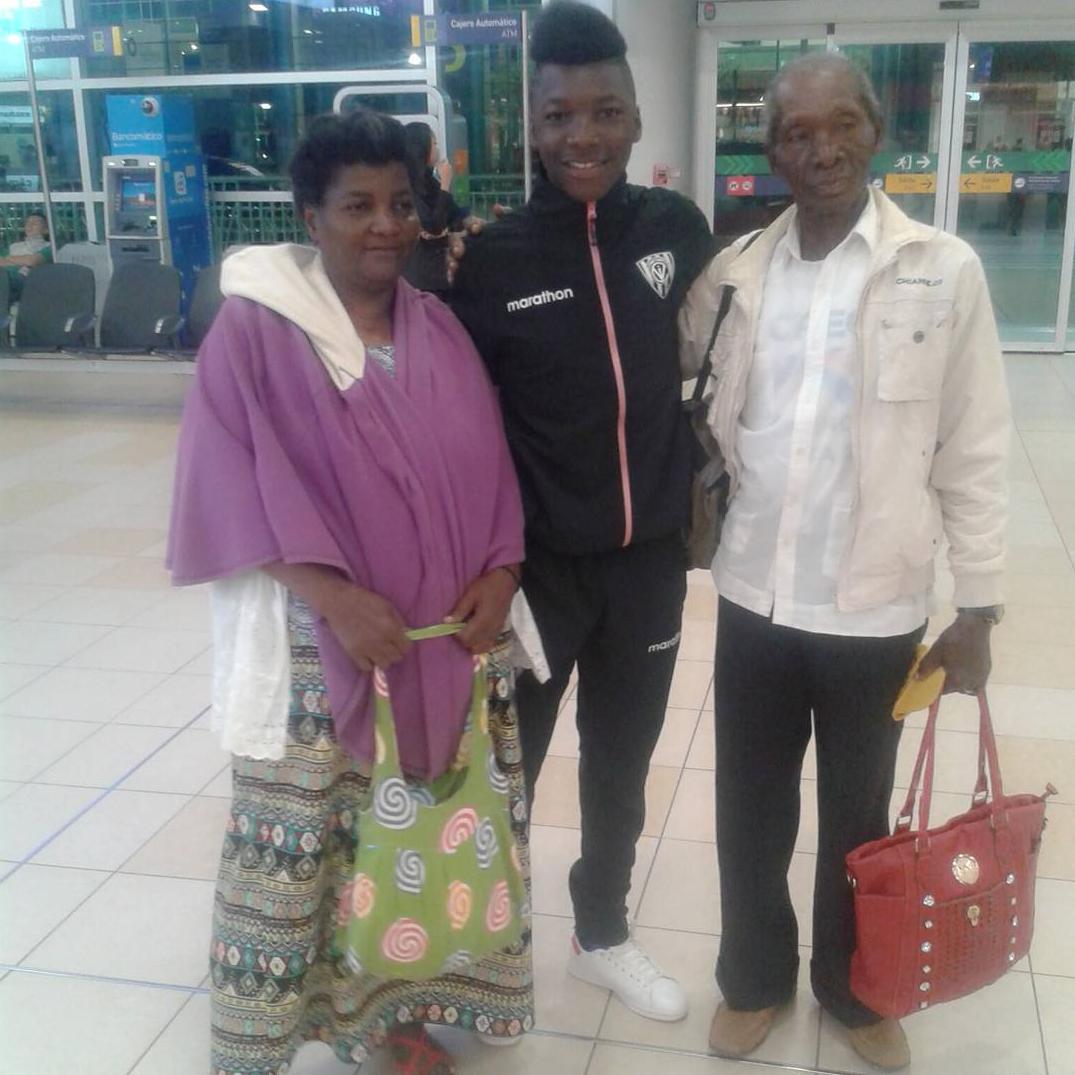
Back in July 2017, not long after Caicedo had left Santo Domingo for Quito — on that road between two worlds — he posted a picture of his parents on social media. “One day, I promise, I’ll make you proud,” it read.
He has already done that and more: to the people of Mujer Trabajadora, of Santo Domingo, of Independielnte del Valle, and all of Ecuador, El Niño Moi is an inspiration.
***
 gregor-robertson.com